







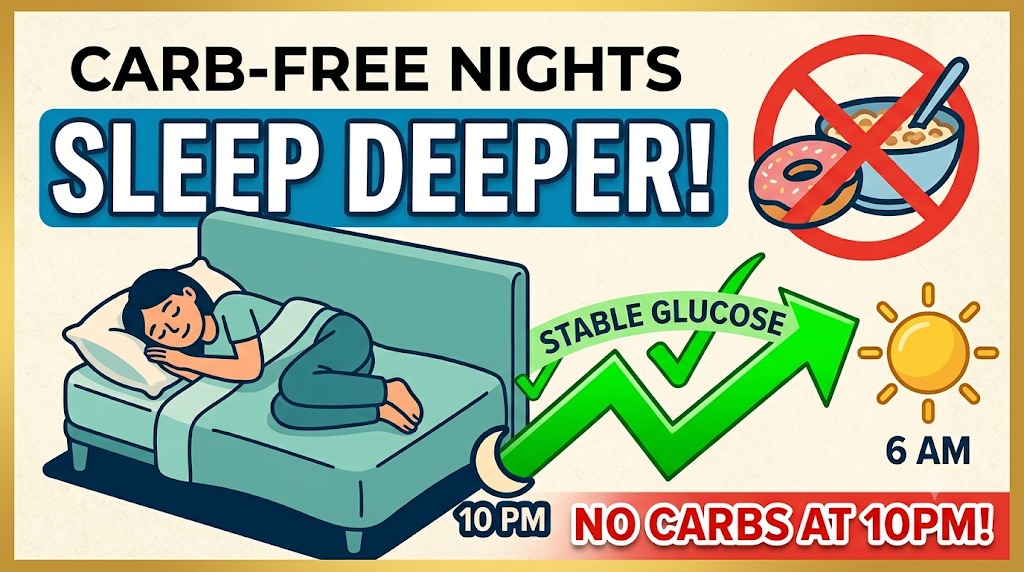
It is 10:00 PM. You are settling into bed, relaxing after a long day, and sudden cravings strike: a bowl of cereal, a handful of cookies, or a thick slice of toast. You indulge, brush your teeth, and drift off to sleep reasonably fast.
Then, like clockwork, your eyes snap open. You check your phone: 3:14 AM.
You aren’t cold, the room is quiet, and you don’t need to use the bathroom—yet your heart is beating faster than usual, your mind is instantly racing, and falling back asleep feels impossible.
This isn’t an isolated coincidence. It is a biological rebound known as reactive hypoglycemia, and it is driven by a hidden hormone cascade triggered hours earlier in your kitchen.
The Biological Chain Reaction: 10:00 PM to 3:00 AM
To understand why a late night snack causes early morning wakefulness, trace the chemical timeline through your bloodstream:
10:00 PM: High-Carb Intake ➜ Rapid Glucose Surge ➜ High Insulin Response
3:00 AM: Cortisol & Adrenaline Alert ◄─ Glucose Crash ◄────────┘
- 10:00 PM — The Glucose Spike: Simple carbohydrates and processed sugars hit your digestive tract quickly, rapidly releasing glucose into your bloodstream.
- 10:30 PM — The Insulin Overdrive: Sensing a massive surge of blood sugar, your pancreas produces a large burst of insulin to move that glucose out of your blood and into your cells for storage.
- 1:00 AM — The Overshoot: Because insulin levels spike so aggressively, your body overcorrects. Insulin keeps working even after the initial sugar surge subsides, driving your blood sugar down lower than where it started.
- 3:00 AM — The Counter-Regulatory Emergency: Your brain relies entirely on glucose for fuel. When blood sugar drops below normal thresholds during deep sleep, your central nervous system treats it as a survival crisis.
To prevent a dangerous drop in blood sugar, your adrenal glands release two powerful emergency hormones: cortisol and adrenaline (epinephrine).
Why Cortisol and Adrenaline Break Your Sleep
Cortisol is your primary stress hormone, naturally programmed to rise gradually in the morning around 6:00 AM to wake you up gently. Adrenaline triggers your classic “fight-or-flight” survival mechanism.
WHAT IS HAPPENING AT 3:00 AM?
->Physiological Event -> What You Feel
-> Sudden adrenaline spike -> Racing heart rate & mild anxiety
-> Emergency cortisol release -> Instant, alert brain state
->Liver releasing glycogen stores -> Restlessness & inability to relax
When emergency levels of adrenaline hit your bloodstream at 3:00 AM, your heart rate increases, core body temperature ticks up, and your brain is shifted out of restorative Rapid Eye Movement (REM) or deep slow-wave sleep directly into Stage 1 or full wakefulness.
You do not wake up because you are fully rested; you wake up because your body pulled the internal emergency brake to raise your blood sugar.
Strategic Shift: How to Avoid the Late-Night Trap
If you need a late-night bite to avoid going to sleep hungry, swap quick-digesting carbohydrates for combinations that stabilize blood glucose.
- Skip High-Glycemic Carbohydrates: Avoid cereal, chips, baked goods, white bread, or sugary desserts within three hours of sleeping.
- Prioritize Protein and Healthy Fats: Combine a small amount of complex carbohydrates with healthy fat or protein to slow down digestion and stabilize glucose absorption.
- Optimal Evening Snacks:
- A handful of raw almonds or walnuts.
- A small serving of plain Greek yogurt with a sprinkle of chia seeds.
- An egg or a small wedge of hard cheese.
- Apple slices paired with natural peanut or almond butter.
Conclusion
Waking up abruptly at 3 AM isn’t a sign of an untreatable sleep disorder—more often than not, it is simply a metabolic reaction to what you ate before turning off the lights. The late-night high-carb snack creates a silent chain reaction, transforming a quick midnight treat into a surge of cortisol and adrenaline just as your body should be reaching its deepest rest.
By shifting away from rapid-digesting sugars and opting for blood-sugar-stabilizing combinations of healthy fats and protein, you remove the emergency trigger. Keeping your glucose stable throughout the night allows your body’s natural circadian rhythm to keep you sound asleep until morning.