




- The Muscle-Loss Trap (and How to Fix It)
When calories drop and regular grains or legumes are removed, the body looks for quick fuel. Without sufficient amino acids, it breaks down muscle tissue for glucose (gluconeogenesis).
To preserve muscle, prioritize sattvik, protein-dense ingredients:
- Pseudo-Cereals: Swap plain tapioca (sabudana) for Amaranth (Rajgira) and Buckwheat (Kuttu). Both are complete or near-complete plant proteins containing all essential amino acids.
- Dairy (Paneer & Curd): Raw or lightly grilled paneer provides slow-digesting casein protein. Greek yogurt or plain curd (dahi) stabilizes the gut and offers high-quality protein.
- Fox Nuts (Makhana) & Peanuts: Dry-roasted makhana and peanuts provide a combination of plant protein, healthy fats, and essential minerals like magnesium.
Vrat Protein Snapshot
Food Item | Protein Content (approx.) | Best Preparation |
Roasted Peanuts | ~25g per 100g | Crushed over cucumber chaat or roasted in minimal ghee |
Paneer (Cottage Cheese) | ~18g per 100g | Pan-seared with cumin (jeera) and rock salt |
Amaranth (Rajgira) Flour | ~13g per 100g | Rajgira rotis, porridge, or cheela |
Buckwheat (Kuttu) Flour | ~11g per 100g | Flatbreads folded with bottle gourd (lauki) |
Fox Nuts (Makhana) | ~9g per 100g | Dry-roasted with a pinch of black pepper and sendha namak |
- Maintaining Steady Daily Energy
Mid-day lethargy usually stems from glycemic volatility—eating simple, high-carb snacks like fried potatoes or sugary drinks that spike insulin and crash blood sugar shortly after.
- Prioritize Complex Carbohydrates: Choose Barnyard Millet (Samak rice) and Sweet Potatoes over refined tapioca or white potatoes. They release glucose steadily into the bloodstream.
- Incorporate Healthy Fats: Ghee, coconut, and soaked almonds slow down gastric emptying, keeping energy stable for hours.
- Balance Electrolytes: Plain water isn’t always enough when carbohydrate intake drops, as the kidneys flush out extra sodium and water. Use Rock Salt (Sendha Namak), drink fresh Coconut Water, and include Buttermilk (Chhaas) to maintain cell hydration and prevent headaches.
- High-Performance Navratri Meal Plan
A sample daily template designed to sustain lean muscle mass and prevent fatigue:
[07:30 AM] Hydration & Primer
1 Glass Warm Lemon Water + Sendha Namak
5-6 Soaked Almonds + 2 Soaked Walnuts
[09:00 AM] Breakfast (High Protein + Complex Carbs)
2 Rajgira or Kuttu Cheelas (made with grated Lauki)
1 Bowl Fresh Curd / Dahi
[01:30 PM] Lunch (Sustained Energy)
1 Bowl Samak Rice Pulao (cooked with vegetables & ghee)
100g Pan-seared Paneer Cubes
1 Glass Mint Buttermilk
[05:00 PM] Evening Fuel
1 Bowl Roasted Makhana + Roasted Peanuts
1 Cup Green Tea or Ginger Tea (without refined sugar)
[08:30 PM] Dinner (Light & Digestible)
Warm Lauki / Pumpkin Soup topped with seeds
1 Baked Sweet Potato Chaat with lemon & rock salt
- Exercise and Physical Activity During Vrat
It is a common myth that all physical activity must stop during Navratri. Complete rest can actually accelerate muscle loss if protein intake is lower than usual.
- Adjust Resistance Training: If you weight train, lower the intensity. Reduce weight loads to 40–50% of your max and stick to compound bodyweight movements (squats, glute bridges, wall push-ups). This sends a signal to your body to retain muscle tissue without overtaxing your recovery system.
- Garba & Dandiya as Cardio: Dancing for Garba can burn 300–500 calories an hour. Treat it as a high-intensity cardio session—hydrate with coconut water or buttermilk before and after to replenish lost electrolytes.
- Avoid High-Intensity Interval Training (HIIT): Deep glycogen depletion combined with HIIT elevates cortisol (the stress hormone), which triggers muscle breakdown and fatigue. Stick to steady-state walking, yoga, or light movement.
Key Mistakes to Avoid
- Starving for 12+ Hours and Overeating at Night: Long gaps drop blood sugar, leading to heavy night cravings and poor digestion.
- Relying on Tea or Coffee to Mask Hunger: Excessive caffeine on an empty stomach triggers acidity and worsens dehydration.
- Skipping Protein: Relying solely on fruits and potatoes leads directly to muscle loss and early fatigue.
CONCLUSION
Fast without the usual fatigue, muscle loss, or post-vrat energy crash by shifting the focus of Navratri fasting from high-carb, deep-fried snacks to protein-dense pseudo-cereals, complex carbohydrates, healthy fats, and proper electrolyte management.
When Kuttu, Rajgira, Paneer, and Makhana take center stage alongside adequate hydration with Sendha Namak, fasting becomes what it was meant to be—a period of genuine metabolic reset, mental clarity, and physical rejuvenation.
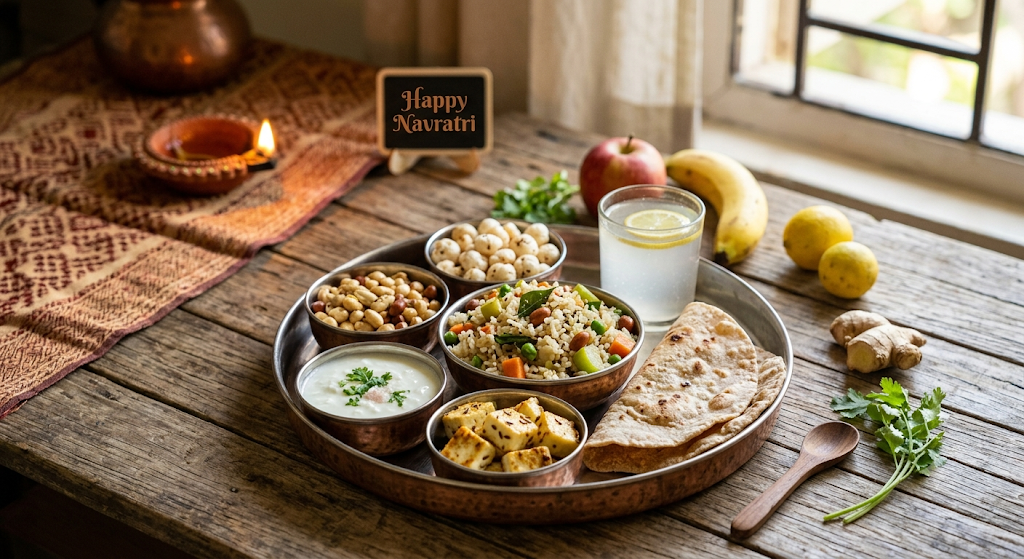
Navratri fasting (vrat) is intended to be a spiritual reset and a digestive detox. However, traditional fasting menus often end up as a parade of deep-fried sabudana vadas, potato chips, and refined sugars.
The result? Rapid blood sugar spikes, energy crashes, muscle breakdown, and feeling completely drained by Day 4.
Navratri fasting can be approached strategically to keep muscle tissue intact, optimize energy levels, and leave the body revitalized.