





Written by Gurleen, Reviewed by Dr. Manvir Bhatia-01/04/2026
Sleep and diet are deeply interconnected. The food you consume not only fuels your body but also influences your sleep quality, duration, and overall restfulness. Poor dietary habits can lead to sleep disturbances, while a balanced diet can promote deep, restorative sleep.
How Diet Affects Sleep
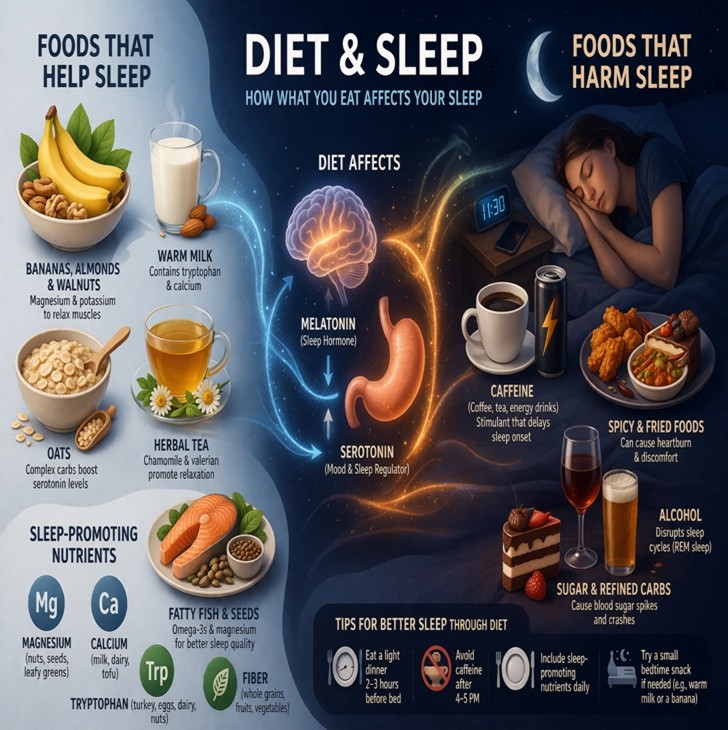
Diet impacts sleep through multiple biological pathways:
- Hormone regulation: Nutrients influence sleep hormones like melatonin and serotonin
- Blood sugar stability: Fluctuations can cause night awakenings
- Gut health: A healthy gut supports better sleep through the gut-brain axis
- Inflammation: Poor diet increases inflammation, disrupting sleep cycles
How Diet Can Improve Sleep
- Foods rich in tryptophan (milk, nuts, seeds) boost melatonin production
- Magnesium-rich foods relax muscles and calm the nervous system
- Complex carbohydrates help in serotonin release
How Diet Can Disrupt Sleep
- High sugar intake → energy spikes and crashes
- Caffeine → delays sleep onset
- Heavy meals → discomfort and indigestion at night
Causes of Poor Sleep Related to Diet
- Excess caffeine (tea, coffee, energy drinks)
- Late-night heavy meals
- High sugar or processed food intake
- Alcohol consumption
- Nutrient deficiencies (magnesium, vitamin D, B12)
- Dehydration
Symptoms of Poor Sleep
- Difficulty falling asleep (insomnia)
- Frequent night awakenings
- Daytime fatigue
- Poor concentration
- Mood swings and irritability
- Increased cravings for unhealthy foods
Functions of Sleep in the Body
Sleep is essential for:
- Cell repair and regeneration
- Memory consolidation and brain function
- Hormonal balance (including hunger hormones ghrelin and leptin)
- Immune system strengthening
- Metabolism regulation
Benefits of Good Sleep (Supported by Proper Diet)
- Improved energy levels
- Better weight management
- Enhanced mental clarity and focus
- Reduced stress and anxiety
- Balanced hormones
- Stronger immunity
Dietary Patterns to Avoid for Better Sleep
Avoid these habits if you want quality sleep:
Foods & Habits to Limit
- Caffeine after 4–5 PM
- Spicy, oily, and fried foods at night
- High-sugar desserts before bed
- Late-night overeating
- Processed and junk foods
- Alcohol before sleep
Dietary Patterns to Follow for Better Sleep
✅ Sleep-Friendly Diet Guidelines
1. Eat Light at Night
- Dinner should be light and easily digestible
- Ideal timing: 2–3 hours before bed
2. Include Sleep-Promoting Nutrients
- Magnesium: nuts, seeds, leafy greens
- Calcium: milk, sesame seeds
- Tryptophan: dairy, bananas
3. Balanced Dinner Plate
- Protein + Fiber + Healthy fats
- Example: dal + roti + sabzi + salad
4. Hydration
- Stay hydrated, but avoid excess water before bed
5. Bedtime Snack (if needed)
- Warm milk with turmeric
- Banana with peanut butter
- Handful of nuts
Do Diet and Sleep Go Hand in Hand?
Absolutely—diet and sleep are closely linked and influence each other.
- Poor diet → poor sleep → increased cravings → unhealthy eating cycle
- Good diet → better sleep → improved metabolism and appetite control
This creates either a negative cycle or a positive cycle, depending on your habits.
Conclusion Diet and sleep are two pillars of good health that cannot be separated. A well-balanced, nutrient-rich diet supports better sleep, while good sleep enhances your dietary choices and metabolism. Making small changes like eating light dinners, reducing caffeine, and including sleep-supporting nutrients can significantly improve your sleep quality.