








Written by Aisha, Reviewed by Dr. Manvir Bhatia, Dated: 12/02/2026
“Obstructive Sleep Apnea and Metabolic Fatty Liver Disease”
Fatty liver disease and Obstructive Sleep Apnea (OSA) are often treated as two separate medical conditions. However, growing scientific evidence shows that these two disorders are closely interconnected and can silently worsen each other if left untreated. Understanding this link is essential for early diagnosis, effective treatment, and long-term health protection.
This blog explains what fatty liver is, what causes it, how it progresses, and how it is strongly linked to OSA, along with global statistics, diagnosis, management, and precautions.
What Is Fatty Liver Disease?
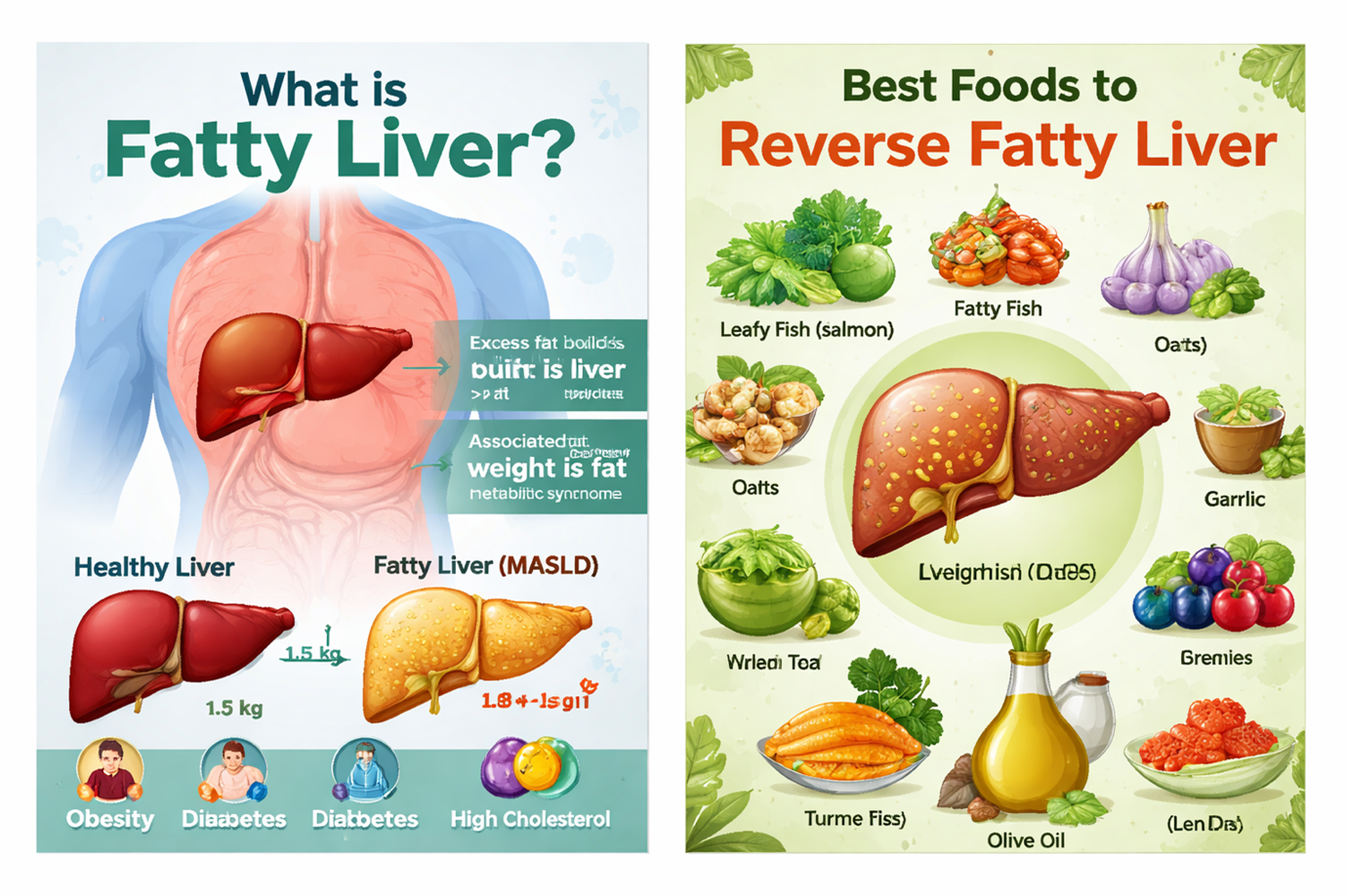
Fatty liver disease occurs when excess fat accumulates in liver cells, exceeding 5% of liver weight. When not related to alcohol intake, it is now commonly referred to as Metabolic Dysfunction–Associated Fatty Liver Disease (MAFLD), previously known as Non-Alcoholic Fatty Liver Disease (NAFLD).
MAFLD represents a spectrum of disease, including:
- Simple fatty liver (steatosis)
- Fatty liver with inflammation (steatohepatitis)
- Liver fibrosis
- Cirrhosis
- Liver cancer
According to global data, nearly 25–30% of adults worldwide have fatty liver disease, making it the most common chronic liver condition today.
What Causes Fatty Liver Disease?
Fatty liver is primarily driven by metabolic dysfunction, not alcohol. Common causes include:
- Obesity (especially abdominal obesity)
- Insulin resistance and type 2 diabetes
- High triglycerides and cholesterol
- Sedentary lifestyle
- Poor dietary habits
- Hormonal imbalance
- Sleep disorders such as OSA
Obesity and insulin resistance play a central role, increasing fat delivery to the liver and reducing fat breakdown.
Symptoms of Fatty Liver Disease
Most people with fatty liver disease have no symptoms in the early stages. When symptoms appear, they may include:
- Persistent fatigue
- Upper right abdominal discomfort
- Unexplained weight gain
- Brain fog
- Elevated liver enzymes on blood tests
Because symptoms are subtle, fatty liver is often detected incidentally during routine tests.
What Happens If Fatty Liver Is Not Treated?
If untreated, fatty liver can progressively worse:
- Simple fatty liver → Steatohepatitis
- Chronic inflammation → Liver fibrosis
- Fibrosis → Cirrhosis
- Cirrhosis → Liver failure or liver cancer
Additionally, fatty liver significantly increases the risk of heart disease, stroke, kidney disease, and diabetes, making it a multisystem disorder.
How Are Fatty Liver Disease and Obstructive Sleep Apnea (OSA) Connected?
The relationship between fatty liver disease and obstructive sleep apnea (OSA) is bidirectional, meaning each condition can worsen the other. This interconnection creates a harmful cycle that significantly increases long-term metabolic and cardiovascular risks if left untreated.
1. How OSA Worsens Fatty Liver Disease
Obstructive sleep apnea is characterized by repeated pauses in breathing during sleep, leading to chronic intermittent hypoxia—cycles of low oxygen followed by re-oxygenation. Over time, this oxygen deprivation triggers several harmful processes in the body:
- Increased insulin resistance, promoting fat storage in the liver
- Oxidative stress, which damages liver cells
- Chronic systemic inflammation, accelerating liver injury
- Enhanced fat accumulation in liver tissue
Clinical studies have shown that up to 85% of individuals with severe OSA have fatty liver disease, and many of these patients may progress to liver fibrosis or advanced liver damage if OSA remains untreated.
2. How Fatty Liver Disease Increases the Risk of OSA
Fatty liver disease is closely linked to metabolic dysfunction and body-fat redistribution, which can directly worsen sleep apnea. Common contributing factors include:
- Central (abdominal) obesity
- Increased fat deposition around the neck and upper airway
- Metabolic and inflammatory changes
These factors are known to increase upper airway narrowing and collapse during sleep, leading to more frequent apneas and hypopneas, thereby increasing the severity of OSA.
The Vicious Cycle
When fatty liver disease and OSA coexist, they reinforce each other—worsening metabolic health, sleep quality, and liver function over time. Early diagnosis and integrated management of both conditions together is essential to prevent disease progression and long-term complications.
What Is Obstructive Sleep Apnea (OSA)?
Obstructive Sleep Apnea (OSA) is a common sleep disorder in which breathing repeatedly stops and starts during sleep due to blockage of the upper airway.
Key symptoms include:
- Loud snoring
- Mouth Dryness
- Daytime sleepiness
- Morning headaches
- Poor concentration in daytime work
Globally, OSA affects nearly 1 billion people, with higher prevalence in men than women. ..\..\..\Downloads\001421-JMLS-2.pdf
Global Prevalence: How Big Is the Problem?
Fatty Liver Disease
- Affects ~30% of adults worldwide
- Increasing rapidly due to obesity and diabetes
- Slightly more common in men, but rising in women
Obstructive Sleep Apnea
- Affects ~24% of adult men
- Affects ~9–15% of adult women
- Prevalence increases with age and weight
- Post-menopausal women have higher risk
Both conditions are rising every year, especially in urban populations.
Key Scientific Reference
- Chen Y, Chen L. Research Progress on the Correlation between Obstructive Sleep Apnea Hypopnea Syndrome and Metabolic Related Fatty Liver Disease. Journal of Medicine and Life Sciences, 2025.
How Do We Diagnose Fatty Liver and OSA Together?
Diagnosing Fatty Liver
- Blood tests (ALT, AST)
- Abdominal ultrasound
- Fibro Scan (CAP & liver stiffness)
- MRI or CT in selected cases
- Metabolic markers (HOMA-IR, triglycerides)
Diagnosing OSA
- Overnight polysomnography (sleep study)
Apnea-Hypopnea Index (AHI)
- Mild: 5–15
- Moderate: 15–30
- Severe: >30 events/hour
Managing Fatty Liver and OSA Together
Lifestyle Modification (Core Treatment)
- Weight loss of 7–10% significantly improves both conditions
- Regular aerobic exercise
- Mediterranean or low-glycemic diet
- Avoid alcohol and smoking
CPAP Therapy for OSA
- Gold-standard treatment for OSA
- Improves oxygen levels and sleep quality
- May slow fatty liver progression when combined with weight loss
Medical Management
- Control diabetes, cholesterol, and blood pressure
- GLP-1 receptor agonists may help improve both liver fat and OSA severity
- No single drug cures fatty liver yet; lifestyle remains key .
Can Fatty Liver and OSA Be Reversed?
Yes – – early detection makes reversal possible.
- Fatty liver can regress with weight loss and metabolic control
- OSA severity can reduce with CPAP and lifestyle change
- Delayed treatment increases risk of irreversible damage
Precautions for Patients with Both OSA and Fatty Liver
If you have OSA + Fatty Liver, you should:
- Never ignore snoring or daytime sleepiness
- Use CPAP regularly if prescribed
- Monitor liver enzymes periodically
- Maintain healthy sleep duration
- Avoid crash dieting
- Get annual metabolic screening
A multidisciplinary approach involving sleep specialists, hepatologists, and nutrition experts is ideal.
Final Takeaway
Fatty liver disease and Obstructive Sleep Apnea are silent partners in metabolic damage. Treating one without addressing the other leaves patients at risk for long-term complications. Early diagnosis, lifestyle correction, and integrated care can dramatically improve outcomes.
Understanding this connection empowers patients to take control—before irreversible damage occurs.